Saturday, 18 June 2016

Ethics in my practice...

My ethics are what determine how I react in different situations and might be different from someone of a different cultural or religious background. However, there is a code of practice that governs our behaviour as teachers: Code Of Ethics for Certified Teachers.
The key focus is that in dealing sith students, whanau, colleagues, The BOT, cluster colleages.....
  • We treat people with respect
  • We nurture all students and encourage them to think critically
  • We promote student wellbeing
  • We collaborate with whanau for the good of their child
  • We respect privacy and confidentiality
  • We collaborate with and support colleagues 
  • We promote our school in a positive manner
There was probably much more but this seems to be the essence of it.... and should be what is at the foundation of all my actions as a teacher.

What happens when you throw the ever-changing aspect of social media into the mix? Keeping our students safe becomes a much more challenging task than it was 20 years ago.

I have been blogging with my class for at least 6 years, students have had individual blogs for three years and my students have been using Titter as a reflective tool for the same amount of time. According to the NZ Teacher's Council (2012) the purpose of using social media must be established and I can attest that blogging has increased student writing due to a sense of ownership and audience. Using Twitter allows for the succinct sharing of reflections and both of these tools allows us to connect with a wider community of learners, where we can begin to collaborate and have access experts from around the world. 

So how do my personal ethics and choices protect both me and students from potential issues?
I migh not call myself an early adopter but I was pretty close behind. I value the professional support I gain through Twitter and the opportunities that social media bring to education. But how can I make use of this resource and keep myself professionally 'safe' in my professional environment?

My personal twitter account @kiwiallana is where I share my learning as a teacher, blog posts and Mindlab assignments. I am careful to make my posts positive and think carefully about what is professionally appropriate for posting. This account is not shared with students. 

The class share a separate account @coolkiwikids where they post reflections and images from class. These are identified only with a first name and images must be checked before posting. 

My personal Facebook account is very inactive but does allow me to connect with family overseas and is mainly limited to how my garden is growing or how many mice the cat has caught - nothing that could be a bad example to students should they 'happen' to see any of the posts. I do not 'friend' students or their parents. I have also chosen to not 'friend' the school so that my personal Facebook account has no connection with my professional life. I do know of a colleague who was intentionally 'stalked' by students and understand the importance of keeping everything professionally appropriate and separate.

Digital Ethical Issue:
Within the school environment, we have so many systems in place to protect our students but have also been very lucky to not have had many major issues arise. As a result, I will unpack something that I can see being a possible digital issue.
All senior students at our school have personal 'Blogger Blogs' and Google Drives which are tracked through Hapara Dashboard. Students have completed a series of 'Cyber Citizenship' lessons at the beginning of the year, signed annual safety and image sharing contracts then completed a BYOD Quiz before creating their own 'safe' password and learning about how to use their blog. This year our inquiry included lessons on blogging skills including their digital foodptints and acknowledging sources. There are still workshops being run throughout the year for students to upskill in this area.

The educational purpose of these blogs are for student writing, reflection and to share their learning with family and the wider learning community. We train students to make constructive comments on one-another's work with clear next steps as they are AKO kids and are excellent teachers of their peers.

But what happens if a student posts an inappropriate image of another on their blog, or makes 'bullying' type comments on another student's work or in the form of an e-mail?

Hall (2001) would suggest that there are a series of questions to ask when dealing with a digital issue. For us the steps would be very clear and based on the contract signed which determines our school expectations.

This type of behaviour would be picked very qucikly. Any posts, comments or e-mails would be sent to our ICT co-oridnator and teachers via the 'Linewise' and 'inappropriate word' filter. We also have the protocol of students only saving blog posts with TBC (To Be Checked), then the teacher giving advice or posting the piece for them, until they have earned the right for independent posting.

The facts of the incident would be unpacked then students and parents would be referred back to the signed contract about appropriate use of ICT. As a restorative school, the people harmed would be identified and a way to restore this relationship would be set in place with the students involved. If it was a more serious case, a restorative conference would be set up between the two families, with a trained facilitator to unpack the steps required to restore the relationships, a plan and monitoring would be set in place. In all instances there could be a period where the student was removed from the school wiifi, followed by close supervision and tracking.

Any learning opportunities would be unpacked from this event for the remainder of the class and the need for futher training in what is 'appropriate use' would be establised and carried out. Systems would be reviewed to see ifchanges need to be made for the future.

Pandora has been let out of the box and in most instances, devices and social media are an effective tool in making connections, collaboration and sharing learning. There could be no suggestion that these tools should be removed from our classrooms. We do, however, need to have strong systems in place to protect our students from potential issues that might arise. 


Source: 

Hall, A. (2001). What ought I to do, all things considered? An approach to the exploration of ethical problems by teachers. Paper presented at the IIPE Conference, Brisbane. Retrieved from http://www.educationalleaders.govt.nz/Culture/Developing-leaders/What-Ought-I-to-Do-All-Things-Considered-An-Approach-to-the-Exploration-of-Ethical-Problems-by-Teachers

Henderson, M., Auld, G., & Johnson, N. F. (2014). Ethics of Teaching with Social Media. Paper presented at the Australian Computers in Education Conference 2014, Adelaide, SA. Retrieved from http://acec2014.acce.edu.au/sites/2014/files/attachments/HendersonAuldJohnson_EthicalDilemmas_ACEC_2014_0.pdf:
Ministry of Education. (2015). Digital technology- Safe and responsible use in school. Retrieved from http://www.education.govt.nz/assets/Documents/School/Managing-and-supporting-students/DigitalTechnologySafeAndResponsibleUseInSchs.pdf: 

New Zealand Teachers Council.(2012). Establishing safeguards.[video file]. Retrieved fromhttps://vimeo.com/49216520

Friday, 10 June 2016

Week 29 - APC - Influence of Law and Ethics on Professional Practice...

Identifying your personal ethics
We are constantly being asked to make objective judgements on issues through the process of ethics, yet many of these ethics are based on theories of morality.
Ethics are not a single topic you can study in isolation but are a foundation upon which you live and practice. Everything you do, every decision you make, has ethics at its core, driving or motivating your actions and decisions. Sometimes you will recognise the ethics of a situation and sometimes you will think there are no ethics involved. Identifying your personal ethics allows you to understand what drives and motivates you to respond to situations in certain ways. Identifying and understanding your professional ethics provides part of the map on your professional journey and at times prescribes exactly what you can and cannot do. Often ethics are not black and white, they are shades of grey. Laws or a Code will not always provide the specific answer but can be a legal ground upon which you can move towards a possible solution.
Understanding Professional Ethics
Identifying and understanding your professional ethics is part of the journey of your professional development and at times prescribes exactly what you can and cannot do.
A Code of Ethics is one way an organisation can set the limits for minimum behaviours in their profession or organisation. Adherence to such a Code requires education and understanding of those inside and outside an organisation and profession.
Think about how the NZ Code Of Ethics for Certified Teachers governs your practice.
Ethical dilemma
Identifying your personal ethics allows you to understand what drives and motivates you to respond to situations in certain ways. Being able to reflect on your personal views will enable you to more easily set them aside while you make the ethical decisions required in your practice.
Watch the video “Teacher Ethics- Social Media Dilemma” then think about your answers to the ethical problems raised in the video.
Examine social media policies within your organisation and the Code of Ethics for Certificated Teachers and consider how those documents should be interpreted to assist you in ethical decision-making process. Hall (2001) suggests a set of questions to guide the process including:
“Which stakeholder should be given priority? Why?
What restrictions are there to your actions?
Which courses of action are possible?
How should the course of action be implemented?“ (p.5)
Recommended readings:
  • Henderson, M., Auld, G., & Johnson, N. F. (2014). Ethics of Teaching with Social Media. Paper presented at the Australian Computers in Education Conference 2014, Adelaide, SA. Retrieved fromhttp://acec2014.acce.edu.au/sites/2014/files/attachments/HendersonAuldJohnson_EthicalDilemmas_ACEC_2014_0.pdf: The authors categorise 4 common ethical dilemma that teachers need to consider when using social media in teaching. The questions are good starting points for teachers to engage in conversations with colleagues or policy makers in their school in this aspect. Unfortunately, the authors do not provide any guideline to deal with the ethical issues.
Activity 5: Legal and ethical contexts in my digital practice
After reading the Class Notes, create a blog post where you identify an ethical dilemma in your own practice linked to digital or online access or activity.
Explain the dilemma and discuss either:
  • how you would address a potential issue if it occurred in your own practice
or (if relevant):
  • an actual situation that you have knowledge of, and how it was resolved.
The discussion should be in relation to either the guidelines of your organisation on online practice or the code of ethics for certificated teachers.
Reference
Collste, G.(2012). Applied and professional ethics. Kemanusiaan,19(1), 17–33
Education Council. (nd). Code of Ethics for Certificated Teachers. Retrieved from https://educationcouncil.org.nz/content/code-of-ethics-certificated-teachers-0
Hall, A. (2001). What ought I to do, all things considered? An approach to the exploration of ethical problems by teachers. Paper presented at the IIPE Conference, Brisbane. Retrieved from http://www.educationalleaders.govt.nz/Culture/Developing-leaders/What-Ought-I-to-Do-All-Things-Considered-An-Approach-to-the-Exploration-of-Ethical-Problems-by-Teachers

Establishing safeguards from Education Council on Vimeo.


Commitment to Parents/Guardians and Family/Whānau from Education Council on Vimeo.

Indigenous knowledge & Cultural responsiveness in my practice

My third year at University had a profound impact on my belief system about the levels of equality within education. A shift so great that it went against common opinion and is still being slowly translated into my classroom practice. It involved the heady combination of Freire’s Pedagogy of the Oppressed (2000) and Bourdieu (cited in Szeman & Kaposy 2010) looking at the cultural capital passed on by the dominant class to maintain the status quo. Smashed was my naive view that we all had an equal chance and that success was determined by effort. This was not an equal playing field and it was being maintained by the education system itself.


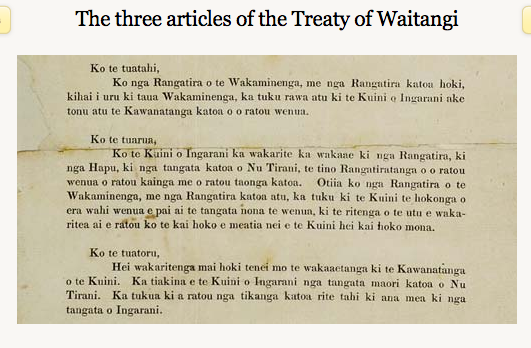
This is obviously something that has been brought to the attention of the education system as noted in Bishop’s Edtalk (2012). He pointed out the disparity of Māori achievement which impacts on our country economically, socially and politically. Under the Treaty or Waitangi Māori were promised equal rights, opportunities and education.


But obviously, equal access to education has not translated in equality of success. The common voice might argue that success is based on effort or innate ability and that Māori are failing because they have a cultural deficit.


Feuerstein (2010) would argue that there is no ‘deficit’ but that everyone is modifiable. The Priority Learners in New Zealand Schools report states that it is not the learners but the system that needs to be modified. (2002) Our key response needs to be to put the child in the centre.

Ko te Tamaiti te Pūtake o te Kaupapa
The Child – the Heart of the Matter


In the Te Kotahitanga research (Gutschlag, 2007) it was suggested that the teacher needs to become the agent of change for our Māori students. To achieve this there are some key changes to be made which will lead to improved learning for Maori but I truly believe they are beneficial for all.

  1. Build relationships for learning.
  2. Adjust the curriculum so it is engaging and values the Māori world view.
  3. Use assessment to provide feedback to inform learning and the social nature of co-constructing learning with and between students.


So what does cultural responsiveness look like on our school?
My initial response is to think - wow, we have a way to go in our being culturally responsive in our school of 250, with only 20 Māori students. And while that may be true, we are in the process of taking action but also have some areas of strength.


Our school vision, mission, and core values
As a school we have recognised the need to adapt our school vision to make it fit our community and be more culturally responsive. We have asked the local Marae for our Māori name and are building stronger relationships as we begin to incorporate our cultural narrative into the fabric of who we are at Springston School.
We are in the process of developing our new vision, in connection with the Taumutu Marae and with our learning community. The clear difference in our new vision is that it is all about excellence - for all.


Vision: Inspiring excellence and outstanding character.

This is supported by our goals of ...
Learner: Self motivated role models who demonstrate empathy and resilience.
Community: Leading engaged, connected school and community partnerships.
Environment: Dynamic, inspirational and nurturing learning environment.


And the final aspect weaving these concepts together is our A+ Characteristics of being articulate, accountable, accepting, adventurous and adaptable. We have the challenge of unpacking the Māori view of this wonderful representation of our Key Competencies to develop the ‘story’ behind each aspect e.g. 

Adventurous: 
Like the tuna, we know our goals and never give up when it gets tough because we are determined and persistent.


PD leading to school activities:
I want to unpack all the things we are doing well and they don’t really fit into just one category so here goes…
  1. In 2013 the whole teaching staff made a commitment to learning Te Reo and completed a year at Te Wananga of Aotearoa (TWoA), two staff then took it on for a further year. This has resulted in a confidence and use of Te Reo across the school with daily use in waitata, karakia, whakatouki and speeches at official functions.
  2. Personally I continued with TWoA with a further year in raranga (flax weaving), which has played a large role in my AKO students teaching others how to weave and preparing putiputi (flax flowers) for a teacher’s wedding.
  3. The weekly admin meeting begins with a waiata and a new Te Reo phrase to use for the week.
  4. Tracking boards are kept where Teams can track the progress of target and Māori students to keep ourselves accountable that we are meeting the needs of our Priority Learners. (2012)
  5. The Kapa Haka team performs in both the Christchurch and local Ellesmere Kapa Haka Festivals.
  6. Our whole school participated in a powhiri to welcome the new principal, as supported by our local marae, and images were included in their document to explain the protocol for these events.
  7. Personally, I begin every year with a mini mihi whakatau, where past students welcome the new ones into our learning space, talk about the exciting things that happen there and share kai on the very first day.
  8. Having a student buddy system throughout the whole school that reflects the reflecting tuakana teina relationship where the older students mentor, support and and help run ‘starting school parties’ for the little ones.
  9. Senior students are given responsibility and can develop leadership skills in the areas of hospitality, build-teams, bus monitors, librarians and other areas.
  10. Student voice and action is harnessed through our newly established student council.
  11. Our local marae is beginning to be use more frequently as a learning resource with visits to Lake Ellesmere to unpack the importance of the tuna (Longfin eel) and unpacking protocol by spending time on ‘our’ marae.
  12. Being an enviroschool and playing an active role in student involvement as ‘tamarkik tiaki’ - guardians of our environment. They work in our school garden, are planning to get chickens and have been planting native trees down at our local Chamberlains Ford.
  13. Visual evidence of the Maori culture is becoming more evident around our school with the wind garden being created by ECO Team students to represent Tāwhirimātea (god of the wind) and pou (wooden posts) with our Key Competencies engraved on them.

For a school with a very small Māori community, I know we are doing lots of things to make connections with our environment but also, when you list them like this, the list of culturally responsive actions is quite long.The questions is…. are these making a deep and meaningful impact on helping our Māori students and whanau feel like the school is theirs and values Māori knowledge and world-view, or are these actions just superficial?
The only way to progress is to keep engaging in korereo with our Māori community and taking action to incorporate their wishes and advice as we continue this journey together.


References:
Bishop, R. Edtalks.(2012, September 23). A culturally responsive pedagogy of relations. [video file].Retrieved from https://vimeo.com/49992994
Bishop, R, Berryman, M., Cavanagh, T. & Teddy, L. (2009). Te Kotahitanga: Addressing educational disparities facing Māori students in New Zealand. Teaching and Teacher Education, 25(5)734–742.
Education Review Office, (2012) Evaluation at a Glance: Priority Learners in New Zealand Schools. Downloaded from http://www.ero.govt.nz/publications/evaluation-at-a-glance-priority-learners-in-new-zealand-schools/ 
Feuerstein, R., Feuerstein, R. S., & Falik, L. H. (2010). Beyond smarter: Mediated
learning and the brain's capacity for change. New York: Teachers College Press.

Freire, Paulo. (2000) Pedagogy of the oppressed /New York : Continuum
Gutschlag, A.(2007). Some implications of the Te Kotahitanga model of teacher positioning. New Zealand Journal of Teachers’ Work, 4(1), 3-10. Retrieved from http://www.teacherswork.ac.nz/journal/volume4_issue1/gutschlag.pdf.
Szeman, I., Kaposy, T. (2010) 2010, Cultural Theory: An Anthology. Wiley-Blackwell

Monday, 6 June 2016

Week 28 - APC - Indigenous knowledge & Cultural responsiveness

Aotearoa New Zealand TodayToday Aotearoa New Zealand is often viewed as a Pasifikanation, and is increasingly culturally diverse. Those of European origin only make up 67 percent of the population. Maori comprise 14.6 percent with the remainder being made up largely of Pasifika nations (6.9 percent), Asians (9.2 percent) and various others (1.7 percent) (Findsen, 2012). The fact that this is now a multicultural society places Māori, as Tāngata Whenua (people of the land) as possibly in an even more marginalised position.
However the Treaty of Waitangi placed Māori in a particular position within Aotearoa whereby they are afforded due consideration in accordance with the agreement made with the British Crown when the two parties signed the treaty. The crown guaranteed partnership in mutually negotiated endeavours (such as education, conservation, health and wellbeing). The crown also pledged the right to full participation in society. Although it was hard fought, and not fully recognised until the 1970s, Aotearoa New Zealand is now a bicultural nation within which resides a multicultural society. The treaty of Waitangi is significant in policy and the principles of partnership, participation and protection are central features of policy (Findsen, 2012).  
Culturally responsive teaching practiceCulture is not exclusive to race and/or ethnicity. It also refers the unique features of a community; its demographic makeup, including location, age, gender, language/s spoken, local history, industry and economics.
Understanding the specific cultural characteristics of a community is critical for achieving positive outcomes.
The social and cultural makeup of our societies is changing as people have become more mobile.There are huge populations of people who have relocated or become dislocated from their social groups as a result of war, employment, natural or environmental disasters.
As a consequence, societies are becoming more and more culturally diverse. There is a continual interplay between the political issues involved in provision of services to diverse groups and the social realities of their lived experiences as ‘culturally located’ individuals living and operating in cross-cultural contexts.
In Aotearoa New Zealand The Treaty of Waitangi provided a platform for authentic engagement with Māori as the indigenous people of New Zealand. This has had a significant impact on how diverse groups of people are catered for in the health and education sectors through the provision of culturally appropriate services.
At Unitec, the embedding of mātauranga Māori is one of the characteristics of its Living Curriculum. The Poutama* is used as a guide to establish a three-stage progression to consider the alignment between the Matauranga Maori and the Living Curriculum (Unitec,n.d)
(*Poutama is the stepped patterns of woven tukutuku panels are a metaphor for scaffolding knowledge - Unitec Glossary).
You can use the Poutama to guide your reflection on the cultural responsiveness in your organisation.
Culturally responsive pedagogy is defined by Gay (2001, p.106) as “using the cultural characteristics, experiences and perspectives as conduits for effective teaching”. It is reflected in five elements including the knowledge about the culture diversity, the culturally integrated content in the curriculum, the development of the learning community, the ability to communicating with culturally diverse students and the culturally responsive delivery of instruction (Gay, 2001). Whereas, Bishop, Berryman, Cavanagh and Teddy (2009) emphasises on the importance of student-teacher relationship in culturally responsive teaching. It is suggested that the learners’ culture needs to considered and integrated their learning activities.
Suggested reading:
Activities 4 : Indigenous knowledge and cultural responsiveness in my practice
After reading the Class Notes, create a blog post where you first share your own views on the indigenous knowledge and culturally responsive pedagogy.
Then critically reflect on how you or your school addresses cultural responsiveness in practice in two of the following areas (preferably you would evaluate one that is done well and another which needs improvement):
  • vision, mission, and core values
  • policies,
  • goals,
  • communication methods,
  • decision-making,
  • planning and assessment,
  • learning activities,
  • school-wide activities,
  • resources
References
Bishop, R, Berryman, M., Cavanagh, T. & Teddy, L. (2009). Te Kotahitanga: Addressing educational disparities facing Māori students in New Zealand. Teaching and Teacher Education, 25(5)734–742.
Findsen, B. (2012). Older adult learning in Aotearoa New Zealand: Structure, trends and issues. Presented at Adult Community Education (ACE) Conference.
Gay, G. (2002). Preparing for culturally responsive teaching. Journal of Teacher Education, 53(2),106-116.
Shaw, S., White, W. & Deed, B. (2013) (Ed.). Health, wellbeing and environment in Aotearoa New Zealand.South Melbourne, Australia:Oxford University Press.

Wednesday, 1 June 2016

Week 27 Issues facing Education

My first year teaching was in a small rural school over 25 years ago when teachers had purple fingers from the banda machine and computers in the classroom was just a dream. One of my biggest challenges was how to draw a term plan onto an A3 piece of paper by hand and learning what a floppy disc was. Oh how life has changed and continues to change at an ever increasing pace. What I do know, is that if I continued to be the same teacher I was back then, I would not be of any value in the classroom today. The last 20 years of my teaching career has be one of constant change and professional growth.

‘If we teach today’s students as we taught yesterday’s, we rob then of tomorrow.’
John Dewey 1859 - 1952

According to US National Intelligence Council (2012)’s “Global trends: Alternative Worlds” and KMPG International’s (2014) “Future State 2030” the challenges facing us internationally are that of empowering individuals and the ubiquity if digital technology. Although computers were a rarity when I began teaching, they now invade our homes, schools and our person with wearable technologies as we rely on them for increasingly more. This access to technology allows students to search out their own knowledge from experts around the world.

Bruce (2016) and Robinson (2010) both point out that to prepare students for the 21st Century, we must be developing the skills of creativity, innovation and collaboration. No longer will ‘batch taught’ content focussed, compliant workers meet the needs of the market place and if this is the case, we must look closely at what is really going on in our classrooms. What are we valuing and spending our time testing?
Image from Robinson in RSA 2010

The Education Review Office (2012) suggested that here in New Zealand the focus needs to be on developing student centred learning, a responsive and rich curriculum and assessment for learning.
The huge changes across education at the moment incorporate all of these points with the need to meet the challenge of working in modern learning environments (MLE’s) or innovative learning environments (ILE’s) to provide child centred learning, ubiquitously using technology to meet learning needs and scaffold independence in learning.

I had the privilege of hearing Neill O'Reilly, principal of Waitākiri School explain their philosophy behind child centred learning within flexible learning spaces. He suggested our biggest challenge is that schools have a shared belief of effective pedagogy, learning is child centred and teachers collaborate to use the learning space and technology effectivelly to enhance learning. The Horizon Report (2015) would agree with O’Reilly (2016) for child centred learning to take place, collaboration is key. We need to begin to unpack what skills teachers might need to make this happen.

The question is how will I address these trends and issues in my classroom and within my learning community.

Is our learning space child centred?
My co-teacher and I are beginning to ask those hard questions…. what evidence is there in our learning space that it is student centred? While we still follow the ‘hands up’ rule, success criteria are co-constructed and clearly unpacked with students, their learning is purposeful and where possible embedded in real life challenges such as planting to bring back the Tui to our area or improving our waterways to support the longfin eel. 

Students are given choice in the form of workshops or inquiry focus groups along with where to work and who to work with but not yet when to work. In the past we have included an element of mixed ability grouping in reading and writing but in the process of moving into our new flexible learning space and catering to the needs of our ORS students, we have slipped into some old habits. We do focus lots of having a positive mindset and using a range of strategies to get out of the 'Learning Pit'.

Target setting is both by the students and with the teacher but also supported by buddy conferencing and peer editing. We have a focus of AKO in our class where we have 57 teachers not just two. Students run their own learning conversations, confidently sharing their targets with parents, progress and helping determine new targets. We are great at teaching ICT based skills and giving students choice about how to share their learning with the wider world. Contracts are being made in writing where individuals select the genre, topic and then request appropriate workshops after conferencing with the teacher. 

We are gradually changing our role from teacher to someone who scaffolds learning, learning coach and mentor but this is an ongoing journey that needs constant reflection.

Is our learning space collaborative:?
It is clear to my co-teacher and I that moving into our flexible learning space has required many adjustments and has needed to develop in small steps. Is is not ‘my class’ and there is no ‘my space’ but is shared by all learners. 

We are great at targeted teaching where workshops are held in parallel and the co-planning of inquiry but it is clear that there are a much wider range of approaches that could meet the needs of our students, such as using a learning coach to conference or scaffold, using one teacher to observe for student engagement or a specific teaching strategy. We need to shift our focus from how the system is working to investigating the strategies that will support the learning needs of specific students of groups of learners. This is what will make our learning space more student centred and collaborative.

To improve my collaborative skills, the top questions I need to ask myself in the next few weeks are:
  1. Do I pause after asking a question to allow others to respond?
  2. Do I pause after others speak to reflect before responding or try to interrupt with my point of view?
  3. Do I pose questions to explore perceptions, assumptions and interpretations?
  4. Do I present specific, measureable and observable data rather than making generalisations?

This challenge of collaboration is going to be a personal growth opportunity. Teacher training was always about how to work with students, but should have been as much about how to interact with adults. (O’Reilly 2016) If I am to remain effective within today’s classroom, I have to meet this constant change by always reflecting on my assumptions and question why and how I meet the needs of my students.


Bruce, Bryan (2016). World Class Inside New Zealand Education A special report (2016)  May 23rd TV 3. Retrieved from http://www.newshub.co.nz/nznews/should-we-be-worried-about-nzs-education-system-2016052317#axzz49c1lscAk


Education Review Office. (2012). Evaluation at a Glance: Priority Learners in New Zealand Schools. Retrieved 18 May 2016, fromhttp://www.ero.govt.nz/About-Us/News-Media-Releases2/The-three-most-pressing-issues-for-N

Johnson, L., Adams Becker, S., Estrada, V., and Freeman, A. (2015). NMC Horizon Report: 2015 K-12 Edition. Austin, Texas: The New Media Consortium. Retrieved fromhttp://www.nmc.org/publication/nmc-horizon-report-2015-k-12-edition/


National intelligence council.(2012). Global trends: Alternative Worlds. National Intelligence Council: US. Retrieved fromhttps://globaltrends2030.files.wordpress.com/2012/11/global-trends-2030-november2012.pdf

O'Reilly, N (2016) Personal notes and handout from workshop.

The RSA.(2010, Oct 14). RSA Animate - Changing Education Paradigms. Retrieved from https://www.youtube.com/watch?v=zDZFcDGpL4U.